

Air quality directly influences our health, it has become one of the most common causes of premature death, it does not only affect people with asthma or respiratory diseases, but depending on the levels of poor quality it can be harmful to us all. But, how can we know the degree of contamination to which we are exposed? In other words, how to measure air quality?
First of all, since not everyone has an advanced knowledge of chemistry, we are overwhelmed with information about the compounds that can be harmful. We talk about pollution or contamination in general. We know carbon monoxide, we are increasingly aware of the damage of suspended microparticles and we refer negatively to ozone. On television we are told about Nitrogen, or Sulfur Oxides. In addition, we hear that in our homes and workplaces there may be volatile organic compounds, such as formaldehydes, toluenes,…
To bring order to the analysis of air quality, an index called AQI (Air Quality Index) was designed. The index has a range from 0 to 500, with higher numbers indicating poorer quality of breathed air. The following table shows the categories and concentration ranges. These levels are based on WHO recommendations.
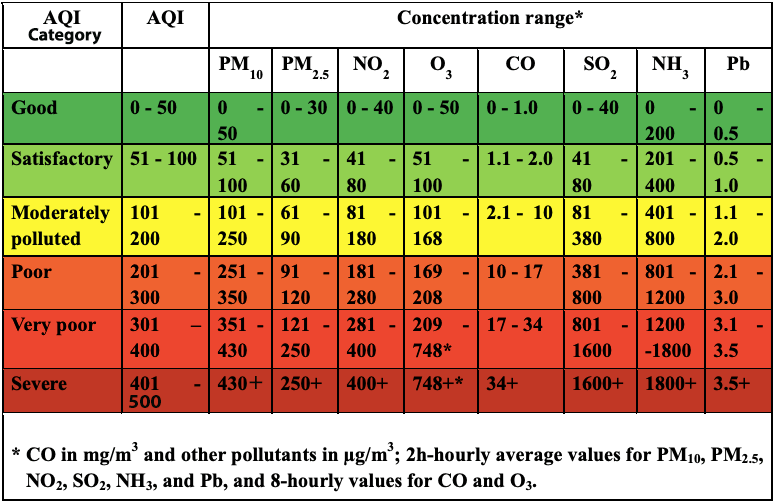
Here are the health implications of each of the 6 AQI levels:
The state of the air can be obtained from many sources. On smartphones, weather applications already offer this index for the measurement source closest to our location.
For example, for iPhone users: Access your iPhone settings and follow these steps: Tap “Settings”; look for the Maps app to access settings options; look for the “climate” section and within this we find “air quality index” right next to it you will see a slider button, and place it in the activated position.
There are also different apps that can be searched in the stores just looking for AQI.
Where do these indices come from? There is a wide network of public meters throughout the territory and it is also complemented by a network of voluntary centers that also publish the measurements of these compounds in real time.
At the time of publishing this news, we observe how there are hundreds of stations of cities showing Unhealthy scores 150-200 mostly from PM2.5, about 20 times WHO recommendations.
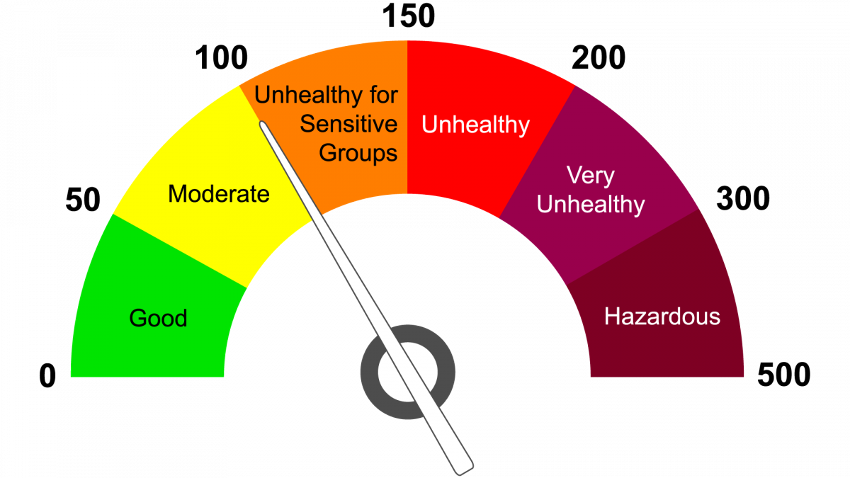
In similar situations that unfortunately are repeated daily in all our cities, how can we protect ourselves?
• Wear a mask outside
• Close your windows to keep polluted air outside
• Use an air purifier
• Avoid outdoor exercise
At Puroh, we care to improve your life in these types of situations. Our devices incorporate a meter that tells you exactly the quality of the air in your room. In addition, we actively purify, without filtering. With a radical reaction called Open-Air Factor, considered the natural detergent of the atmosphere. Puroh neutralizes and mineralizes these particles into healthy compounds like water vapor or oxygen.